
1. Chapter at a Glance
Lemon juice tastes sour, soap feels slippery, and plain water tastes of nothing special. Scientists group such substances as acidic, basic or neutral. But we must never taste unknown substances to find out! Instead, we use special substances called indicators that change colour. This chapter explores natural and lab indicators, what happens when acids and bases mix (neutralisation), and how this helps us in daily life.
- Acidic, basic and neutral substances around us; natural acids in foods.
- Indicators: litmus, red rose (china rose), turmeric.
- Neutralisation — acid + base → salt + water + heat.
- Uses of neutralisation: indigestion, insect stings, soil treatment, factory waste.
2. Nature — Our Science Laboratory
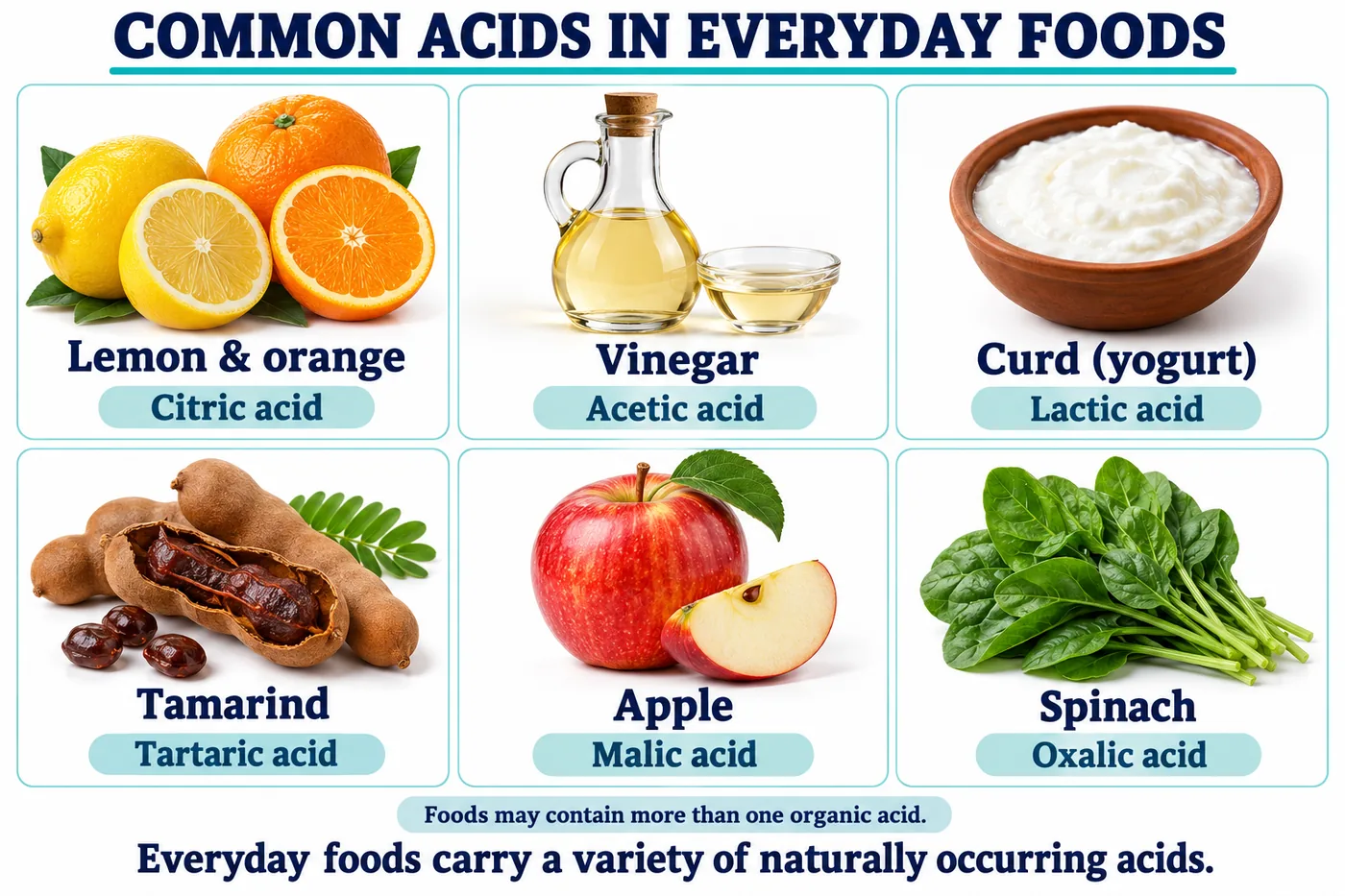
Many foods contain acids naturally. These are called natural (organic) acids.
| Food | Acid present |
|---|---|
| Lemon, orange (citrus fruits) | Citric acid |
| Vinegar | Acetic acid |
| Curd | Lactic acid |
| Tamarind, grapes | Tartaric acid |
| Apple | Malic acid |
| Spinach, tomato | Oxalic acid |
| Ant sting, nettle leaves | Formic acid |
| Property | Acidic substances | Basic substances | Neutral substances |
|---|---|---|---|
| Taste (never test unknowns!) | Sour | Bitter | Neither |
| Feel | — | Soapy / slippery | — |
| Examples | Lemon juice, vinegar, curd | Soap solution, baking soda solution, lime water, washing soda | Pure water, sugar solution, common salt solution |
3. Indicators — Colour Detectives
An indicator is a substance that shows a different colour in acidic and basic solutions. Many indicators come from plants.
(a) Litmus
Litmus is obtained from lichens. It is available as a solution or as red and blue litmus paper strips.
| Solution | Blue litmus | Red litmus |
|---|---|---|
| Acidic | Turns red | No change |
| Basic | No change | Turns blue |
| Neutral | No change | No change |
(b) Red rose / china rose indicator
Soak red rose or hibiscus (gudhal) petals in warm water to get a coloured liquid. It turns dark pink (magenta) in acidic solutions and green in basic solutions.
(c) Turmeric
Turmeric is yellow. It stays yellow in acidic and neutral solutions but turns red in basic solutions. That is why a turmeric stain on clothes turns red when washed with soap (soap is basic).
Liquids A, B and C are tested. A turns blue litmus red. B turns red litmus blue. C changes neither. So A is acidic, B is basic and C is neutral. (Turmeric could confirm B: it would turn red.)
Never taste or touch unknown chemicals. Acids and bases in the laboratory can burn the skin. Always use indicators to test them.
4. Mixing Acids and Bases — Neutralisation
Take some dilute acid with a few drops of an indicator (like china rose — pink). Add a basic solution drop by drop and stir. At one point the colour changes, showing the solution is no longer acidic. The acid and base have cancelled each other’s effect. This reaction is called neutralisation.
Acid + Base → Salt + Water (+ heat is released)
The test tube becomes slightly warm — neutralisation gives out heat. The new substance formed is called a salt; it may be neutral, acidic or basic depending on the acid and base used.
5. Neutralisation in Daily Life
| Situation | Problem | What neutralises it |
|---|---|---|
| Indigestion / acidity | Too much acid in the stomach | Antacid (e.g. milk of magnesia — a base) |
| Ant bite / bee sting | Formic acid injected into skin | Rub baking soda solution or calamine (bases) |
| Wasp sting | Basic substance | Mild acid like vinegar |
| Acidic soil | Plants do not grow well | Quicklime, slaked lime or chalk (bases) |
| Basic soil | Poor plant growth | Organic matter (compost), which releases acids |
| Factory waste | Acidic wastes harm water life | Neutralised with bases before release |
6. Master Table: Key Terms
| Term | Meaning |
|---|---|
| Acidic substance | Sour; turns blue litmus red |
| Basic substance | Bitter, soapy; turns red litmus blue |
| Neutral substance | No effect on litmus |
| Indicator | Substance showing different colours in acid and base |
| Litmus | Natural indicator from lichens |
| Neutralisation | Acid + base → salt + water + heat |
| Salt | New substance formed in neutralisation |
7. Master Summary Table
| Indicator | Acid | Base | Neutral |
|---|---|---|---|
| Blue litmus | Red | Blue | Blue |
| Red litmus | Red | Blue | Red |
| China rose | Dark pink | Green | Light pink / no change |
| Turmeric | Yellow | Red | Yellow |
Chart — sour to bitter scale of common substances (qualitative):
Longer bar = more acidic. Values are only for comparison.
8. Mind Map
- Sour; citric, lactic, acetic
- Blue litmus → red
- Bitter, soapy
- Red litmus → blue
- Litmus, china rose
- Turmeric
- Salt + water + heat
- Antacid, stings, soil
9. Tips and Tricks
- “Acid turns blue to Red” — remember BAR: Blue → Acid → Red. And “Base turns Red to Blue”.
- Turmeric goes red only in bases — the “haldi stain + soap” trick.
- Insect bite problems: identify whether the sting is acid or base, then choose the opposite.
- Saying red litmus turns red in acid — it simply stays red; only blue litmus changes.
- Forgetting that neutralisation releases heat.
- Calling all salts neutral — some salts are acidic or basic.
10. Important One-liners
- Acids taste sour; bases taste bitter and feel soapy.
- Litmus is obtained from lichens.
- Acids turn blue litmus red; bases turn red litmus blue.
- China rose indicator: dark pink in acid, green in base.
- Turmeric turns red in basic solutions.
- Curd contains lactic acid; vinegar contains acetic acid.
- Ant sting contains formic acid.
- Neutralisation produces salt and water and gives out heat.
- Antacids neutralise excess stomach acid.
11. Exam-pattern Questions with Detailed Answers
Which acid is present in curd?
- Citric acid
- Acetic acid
- Lactic acid
- Formic acid
Show answer
Curd has lactic acid. Citric acid is in lemons, acetic in vinegar and formic in ant stings.
Answer: (C) Lactic acid
What colour does turmeric show in soap solution?
Show answer
Soap solution is basic, and turmeric turns red in bases.
Answer: Red
Name the source of litmus.
Show answer
Litmus is extracted from lichens.
Answer: Lichens
A solution turns red litmus blue. What is its nature? What colour will it show with china rose indicator?
Show answer
Turning red litmus blue shows it is basic. China rose indicator turns green in a basic solution.
Answer: Basic; green
Why is baking soda solution rubbed on the skin after an ant bite?
Show answer
An ant bite injects formic acid, which causes pain and burning. Baking soda is basic and neutralises the acid, giving relief.
Answer: To neutralise formic acid
Why does a turmeric stain on a white shirt turn red when washed with soap?
Show answer
Turmeric is a natural indicator. Soap solution is basic, so the yellow turmeric stain turns red. On rinsing well with water, it turns yellow again.
Answer: Soap is basic; turmeric turns red in base
What is neutralisation? Write a word equation.
Show answer
The reaction between an acid and a base in which their effects cancel out, forming salt and water, with heat released.
Answer: Acid + Base → Salt + Water (+ heat)
Why do farmers add slaked lime to some fields?
Show answer
When soil becomes too acidic, plants grow poorly. Slaked lime is a base that neutralises the excess acid in the soil.
Answer: To neutralise acidic soil
You have only red litmus paper. How will you identify three bottles containing acid, base and water?
Show answer
Dip red litmus in each: the one turning it blue is the base. Now put a drop of this base on two fresh red litmus strips (they turn blue). Add a drop from each remaining bottle: the liquid that turns the blue strip back to red is the acid; the other is water.
Answer: Find base first, then use the blued strip to find the acid
While adding a base to an acid containing china rose indicator, the test tube becomes warm. What two conclusions can you draw?
Show answer
(1) A chemical reaction (neutralisation) has taken place. (2) Neutralisation is a heat-releasing reaction. The colour change of the indicator also shows when the acid has been neutralised.
Answer: Neutralisation occurred; it releases heat
Why should factory waste be treated before being released into rivers?
Show answer
Factory waste is often acidic (or basic). Released untreated, it changes the nature of river water and harms fish and plants. Neutralising it with suitable bases (or acids) makes it safer for the environment.
Answer: To neutralise harmful acids/bases and protect aquatic life
12. Quick Revision Summary
- Acids are sour (citric, lactic, acetic, tartaric, malic, oxalic, formic); bases are bitter and soapy.
- Litmus (from lichens): acid turns blue → red; base turns red → blue.
- China rose: pink in acid, green in base; turmeric: red in base.
- Neutralisation: acid + base → salt + water + heat.
- Uses: antacids, insect stings, treating soil and factory waste.