
1. Chapter at a Glance
“Health is wealth” — but what exactly is health? Is it only not being sick? This chapter explains health as complete physical, mental and social well-being, the habits that keep us healthy, and the causes and types of diseases. You will learn how communicable diseases spread, how non-communicable diseases develop, how diseases are prevented through hygiene and vaccination, and why antibiotics must be used carefully to stop antibiotic resistance.
- Meaning of health; staying healthy through diet, exercise, sleep, hygiene and a clean environment.
- Communicable and non-communicable diseases; pathogens and vectors.
- Modes of transmission of communicable diseases.
- Prevention: hygiene, sanitation, vaccination, immunity; treatment.
- Antibiotics and antibiotic resistance.
2. Health: More Than Not Falling Sick
The World Health Organization (WHO) describes health as a state of complete physical, mental and social well-being, not merely the absence of disease. A person may not have a fever, yet may feel stressed, lonely or unable to work well — that person is not fully healthy.
How can we stay healthy?
- Balanced diet with all nutrients and plenty of water.
- Regular exercise, yoga and outdoor play.
- Adequate sleep (about 8–10 hours for teenagers).
- Personal hygiene — bathing, clean clothes, handwashing, brushing teeth.
- Clean surroundings — safe drinking water, proper toilets and garbage disposal, no stagnant water.
- Good mental and social health — friendships, hobbies, talking about worries, limited screen time.
3. Diseases: Causes and Types
A disease is a condition in which the body or a part of it does not work properly. Symptoms are signs we feel or notice, like fever, cough or pain.
| Feature | Communicable (infectious) | Non-communicable |
|---|---|---|
| Cause | Pathogens — bacteria, viruses, protozoa, fungi, worms | Lifestyle, diet, heredity, ageing, environment |
| Spread from person to person? | Yes | No |
| Duration | Often short (acute) — some long | Usually long-lasting (chronic) |
| Examples | TB, cholera, typhoid, malaria, dengue, flu, measles, chickenpox, COVID-19, hepatitis A | Diabetes, high blood pressure, heart disease, cancer, obesity, asthma |
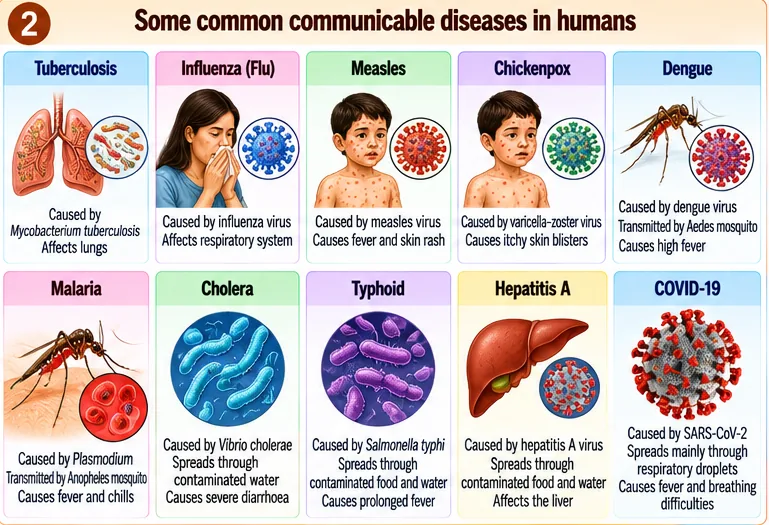
| Disease | Pathogen | Spread by | Main effect |
|---|---|---|---|
| Tuberculosis | Bacterium (Mycobacterium tuberculosis) | Air (cough droplets) | Lungs |
| Cholera | Bacterium (Vibrio cholerae) | Contaminated water/food | Severe diarrhoea |
| Typhoid | Bacterium (Salmonella typhi) | Contaminated water/food | Prolonged fever |
| Malaria | Protozoan (Plasmodium) | Female Anopheles mosquito | Fever with chills |
| Dengue | Virus | Aedes mosquito | High fever, body pain |
| Measles, chickenpox | Viruses | Air, contact | Fever, rash |
| Hepatitis A | Virus | Contaminated water/food | Liver (jaundice) |
4. How Communicable Diseases Spread
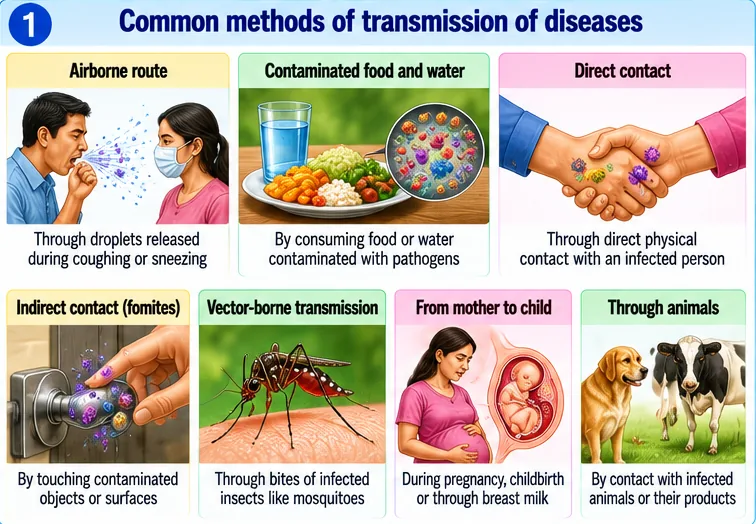
- Air (droplets) — coughing and sneezing release droplets carrying pathogens (flu, TB, COVID-19).
- Contaminated food and water — cholera, typhoid, hepatitis A.
- Direct contact — touching an infected person (some skin infections).
- Indirect contact (fomites) — touching contaminated objects like door handles, then the face.
- Vectors — organisms that carry pathogens: mosquitoes (malaria, dengue), houseflies (carry germs onto food).
- Mother to child — during pregnancy, birth or breastfeeding (some infections).
- Animals — rabies from dog bites; some diseases from infected animal products.
5. Non-communicable Diseases
These develop over time and are not caused by germs. Risk factors include an unhealthy diet high in sugar, salt and fat; lack of physical activity; obesity; tobacco and alcohol; stress; air pollution; and family history. Diabetes, high blood pressure and heart disease are increasing in India mainly due to lifestyle changes. Many can be prevented or controlled with healthy habits and regular check-ups.
6. Prevention and Control
| Method | How it helps |
|---|---|
| Hygiene | Handwashing with soap for 20 seconds, covering mouth while coughing, clean food handling |
| Safe water and sanitation | Boiled or purified water, toilets, proper sewage — stops water-borne diseases |
| Vector control | No stagnant water, mosquito nets and repellents, clean surroundings |
| Vaccination | Trains the immune system in advance; protects individuals and the community |
| Nutrition and exercise | Strengthen immunity and prevent lifestyle diseases |
| Isolation | Keeping infected persons apart to stop spread |
Immunity is the body’s ability to fight infections. White blood cells attack pathogens. A vaccine contains weakened, killed or parts of a pathogen; it makes the body produce defence (antibodies and memory) without causing the disease. India’s Universal Immunisation Programme gives free vaccines for many childhood diseases. Polio was eliminated from India through mass vaccination (India was certified polio-free in 2014).
7. Treatment and Antibiotic Resistance
Diseases are treated with medicines prescribed by qualified doctors. Antibiotics kill bacteria or stop their growth. They do not work against viruses (common cold, flu).
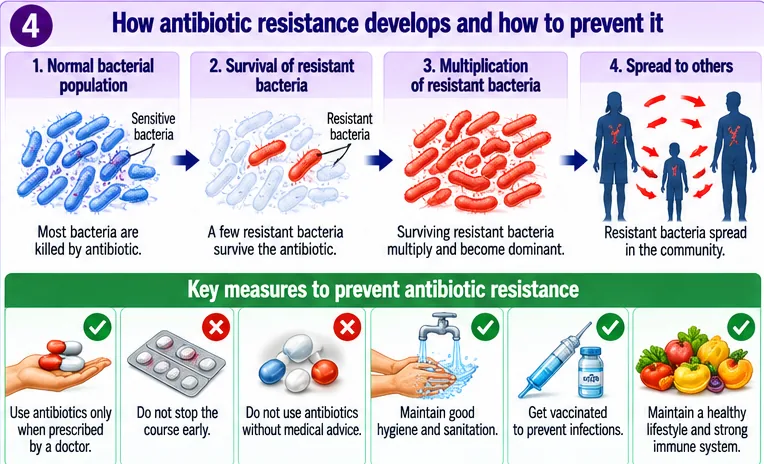
When antibiotics are overused or the course is stopped midway, a few bacteria that can survive the medicine remain. They multiply and spread, producing bacteria that the antibiotic can no longer kill. This is antibiotic resistance — a serious global problem.
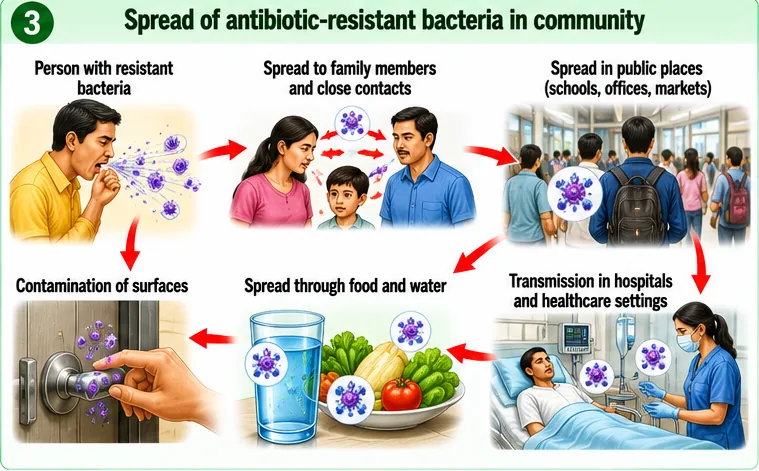
- Take antibiotics only when prescribed by a doctor.
- Complete the full course; do not stop early even if you feel better.
- Never self-medicate or share antibiotics; do not use them for viral infections.
- Maintain hygiene and get vaccinated to prevent infections in the first place.
8. Master Table: Key Terms
| Term | Meaning |
|---|---|
| Health | Complete physical, mental and social well-being |
| Pathogen | Disease-causing organism |
| Communicable disease | Spreads from one person to another |
| Non-communicable disease | Does not spread; due to lifestyle, heredity, etc. |
| Vector | Organism carrying pathogens (mosquito) |
| Fomites | Contaminated objects that spread germs |
| Vaccine | Prepares immunity without causing disease |
| Antibiotic | Medicine that kills or stops bacteria |
| Antibiotic resistance | Bacteria no longer killed by an antibiotic |
9. Master Summary Table
| Route | Diseases | Prevention |
|---|---|---|
| Air | TB, flu, measles, COVID-19 | Cover coughs, masks, ventilation, vaccines |
| Water/food | Cholera, typhoid, hepatitis A | Safe water, cooked food, handwashing |
| Mosquito | Malaria, dengue | No stagnant water, nets, repellents |
| Contact/fomites | Skin infections, some viral illnesses | Hygiene, cleaning surfaces |
| Lifestyle | Diabetes, heart disease | Diet, exercise, no tobacco |
10. Mind Map
- Physical, mental, social
- Diet, exercise, sleep
- Pathogens, vectors
- Air, water, contact
- Lifestyle, heredity
- Diabetes, heart disease
- Hygiene, vaccines
- Wise antibiotic use
11. Tips and Tricks
- Mosquitoes: Anopheles → mAlaria; Aedes → dEngue.
- Antibiotics are for bacteria, not viruses — “B for Bacteria, B for antiBiotic”.
- For disease questions write: pathogen → route → symptom → prevention.
- Taking antibiotics for a cold or flu (viral).
- Saying diabetes is caught from others — it is non-communicable.
- Thinking health only means no disease.
12. Important One-liners
- Health is physical, mental and social well-being.
- Pathogens cause communicable diseases.
- Malaria is caused by Plasmodium and spread by female Anopheles mosquito.
- Dengue is spread by the Aedes mosquito.
- Cholera and typhoid spread through contaminated water and food.
- TB is caused by a bacterium and affects the lungs.
- Vaccines prepare the immune system in advance.
- Antibiotics do not work against viruses.
- Stopping antibiotics midway can cause resistance.
- Diabetes and heart disease are non-communicable.
13. Exam-pattern Questions with Detailed Answers
Which disease is spread by the female Anopheles mosquito?
- Dengue
- Malaria
- Cholera
- Typhoid
Show answer
Anopheles carries Plasmodium (malaria). Dengue is spread by Aedes; cholera and typhoid by water and food.
Answer: (B) Malaria
Give two examples of non-communicable diseases.
Show answer
Diabetes and high blood pressure (also heart disease, cancer).
Answer: Diabetes, high blood pressure
What is a vector? Give an example.
Show answer
An organism that carries pathogens from one host to another without getting the disease itself, e.g. the mosquito.
Answer: Carrier of pathogens, e.g. mosquito
Why should we not take antibiotics for a common cold?
Show answer
The common cold is caused by viruses, and antibiotics act only on bacteria. Taking them is useless and encourages antibiotic resistance among bacteria in the body.
Answer: Colds are viral; antibiotics act on bacteria
How does a vaccine protect us?
Show answer
It introduces a weakened, killed or partial pathogen that cannot cause disease. The immune system learns to recognise it and keeps a memory, so it fights quickly if the real pathogen enters later.
Answer: Trains the immune system in advance
List three ways to stop the spread of water-borne diseases.
Show answer
Drink boiled or purified water; wash hands with soap before eating and after using the toilet; keep food covered and eat freshly cooked food; use toilets and proper sewage disposal.
Answer: Safe water, handwashing, sanitation
Why is health more than just “not being sick”?
Show answer
A person may have no disease but may be anxious, lonely or unable to function well. True health includes physical fitness, mental peace and good social relationships.
Answer: Includes mental and social well-being
What are fomites? How can we protect ourselves from diseases spread through them?
Show answer
Fomites are objects (door handles, phones, utensils) contaminated with germs. Wash hands frequently, avoid touching the face, and clean commonly touched surfaces regularly.
Answer: Contaminated objects; handwashing and cleaning
Explain step by step how antibiotic resistance develops when a patient stops the medicine after two days.
Show answer
In two days the antibiotic kills most sensitive bacteria, and the patient feels better. But a few tougher bacteria survive. When the medicine is stopped, these multiply, and their offspring share the same resistance. They can spread to others. Next time the same antibiotic fails to cure the infection.
Answer: Survivors multiply and spread resistance
Dengue cases rise after the monsoon in many cities. Give reasons and suggest community actions.
Show answer
Rainwater collects in coolers, pots, tyres and containers, where Aedes mosquitoes breed. Actions: empty and clean water containers weekly, cover water tanks, remove junk that holds water, use nets and repellents, wear full sleeves, and support fogging and awareness drives.
Answer: Stagnant water breeds Aedes; remove breeding sites
Why are lifestyle diseases increasing among young people? Suggest two preventive habits.
Show answer
More junk food rich in sugar, salt and fat; long screen time with little exercise; stress and irregular sleep lead to obesity, diabetes and high blood pressure. Prevention: eat balanced home-cooked meals with fruits and vegetables; exercise or play outdoors at least one hour a day; sleep regularly.
Answer: Poor diet and inactivity; eat well and exercise
14. Quick Revision Summary
- Health = physical, mental and social well-being; supported by diet, exercise, sleep, hygiene.
- Communicable diseases are caused by pathogens and spread by air, water/food, contact, fomites, vectors.
- Non-communicable diseases arise from lifestyle, heredity and environment.
- Prevention: hygiene, sanitation, vector control, vaccination; WBCs and vaccines provide immunity.
- Antibiotics act only on bacteria; misuse causes antibiotic resistance — use only as prescribed and complete the course.